
Our Principles in Action
We design and implement practical, community-driven water, sanitation, and hygiene (WASH) interventions in schools using an integrated water management (IWM) approach that views the natural and engineered water cycles as interconnected systems. Aligning WASH and IWM approaches can help address water scarcity in schools, reduce environmental impacts on the ecosystem, and support more resilient water systems and communities.
Integrated Water Management

Guided by the Sustainable Development Goals, we design our projects through a systems thinking lens. This means recognizing how water connects to other critical systems, such as energy, soil, health, governance, peace, leadership, and local ecosystems.
Systems Thinking

Source: UNESCO
We develop young leaders who combine clear judgment with moral courage, initiative with responsibility, and knowledge with a lasting sense of awe for life. Guided by the Inner Development Goals (IDGs), we cultivate the inner capacities needed for transformative leadership, empowering students to lead themselves, collaborate meaningfully, and act with purpose in an interconnected world.
Through a systems thinking curriculum, students learn to think across disciplines without losing sight of the whole, identifying leverage points while understanding the broader ecological, social, and institutional contexts in which they act. Collaboration, integrity, and authentic self-leadership are strengthened as students remain curious, grounded, and deeply connected to their communities.
Leadership
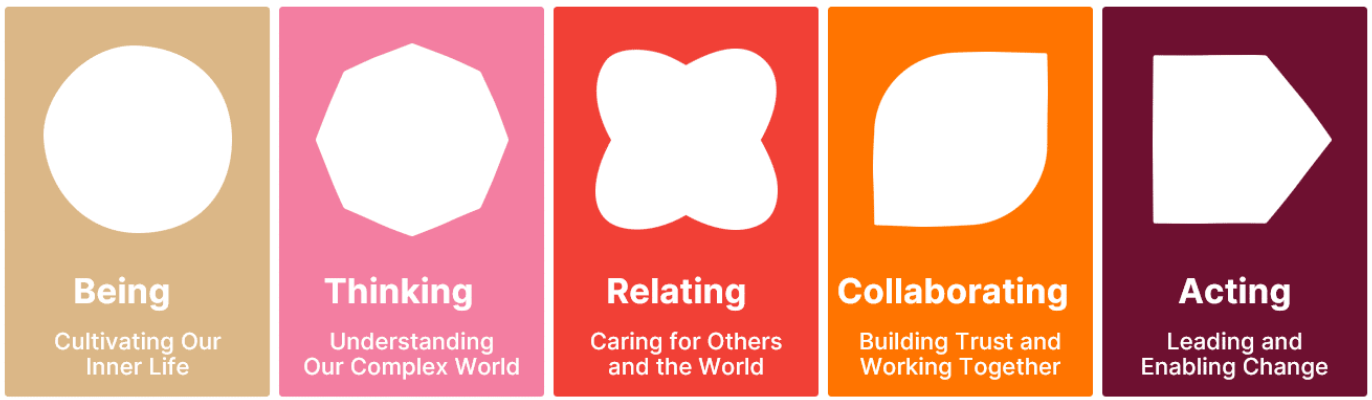

Source: www.innerdevelopmentgoals.org
Community Engagement
Lasting water solutions begin with people.
From the earliest idea to final implementation, we work side by side with each school community. Evidence from the WASH sector indicates that technical solutions alone are insufficient; WASH interventions become more resilient when communities are actively engaged from the outset. Our participatory approach is an iterative process, allowing us to continuously adapt, refine, and respond to the unique needs and evolving realities of each school community. True partnership creates ownership, shared responsibility, and long-term impact.
