
Our Work
We work with a systems thinking mindset, considering water, infrastructure, and community as interconnected parts of a whole.
Phases
-
We focus on understanding local, systemic challenges in water infrastructure, community leadership, and school engagement by consulting directly with the school community and conducting assessments.
Assessment = understanding the situation
Community learning / education = building awareness and knowledge
Capacity building = developing skills, leadership, and structures
-
We work with school communities, together with local and international partners, to plan and design integrated, sustainable water systems adapted to the specific needs and resources of each school.
Collaborative planning and design = co-creating solutions with the community
Contextual adaptation = tailoring systems to the school’s needs and resources
Technical planning = translating ideas into feasible, sustainable system designs
Integrated water management = combining water supply, treatment, reuse, and conservation into one coherent system
-
In collaboration with local and international partners, we build and install water infrastructure and its supporting systems, ensuring functionality, safety, and adaptation to the school environment.
Implementation = constructing and installing water systems
Operationalization = ensuring systems are functional, usable, and maintained over time
-
We work with school communities and local partners to monitor and evaluate the performance and impact of the systems established throughout the project, including water and energy systems, as well as organizational structures such as school and student committees. This includes tracking functionality, usage, maintenance, and community engagement, as well as identifying areas for improvement. Insights from this phase inform ongoing support and strengthen future projects.
Monitoring = tracking performance and use of technical and organizational systems
Evaluation = assessing impact on infrastructure, community, and leadership
Learning = improving systems and informing future work
Bolivia Pilot Project
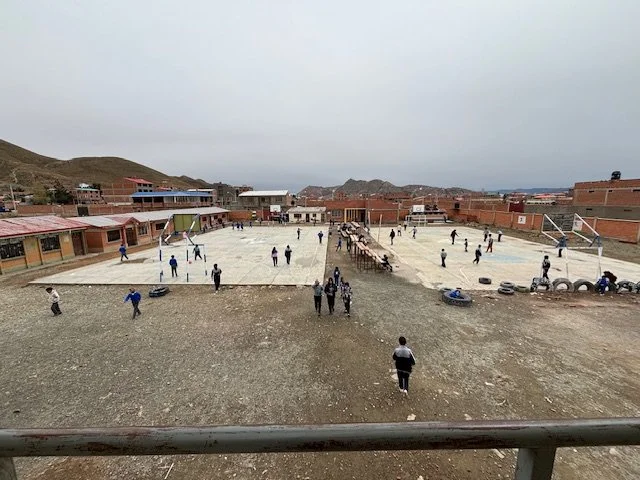
Location: Oruro, Bolivia
Our inaugural pilot initiative is taking place in the city of Oruro, Bolivia. We are collaborating with the school Unidad Educativa Villa Challacollo, a small school in the outskirts of the city. The goal is to improve and expand the existing WASH infrastructure, which is currently operating beyond its capacity.
Local Partner: Team Uru Uru
Our work is currently focused on Phase 1, laying the foundation for the collaborative design and implementation phases that follow.
Phase 1: Community Assessment, Learning, and Capacity Building (Current Phase)
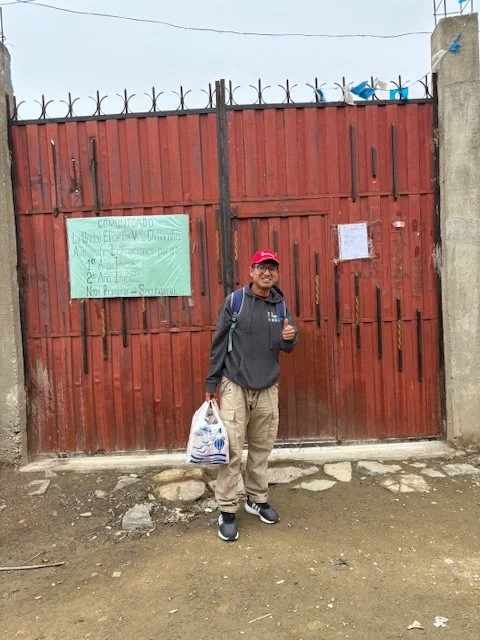
Lic. Gustavo Blanco, founder of Team Uru Uru Project, our local partner.
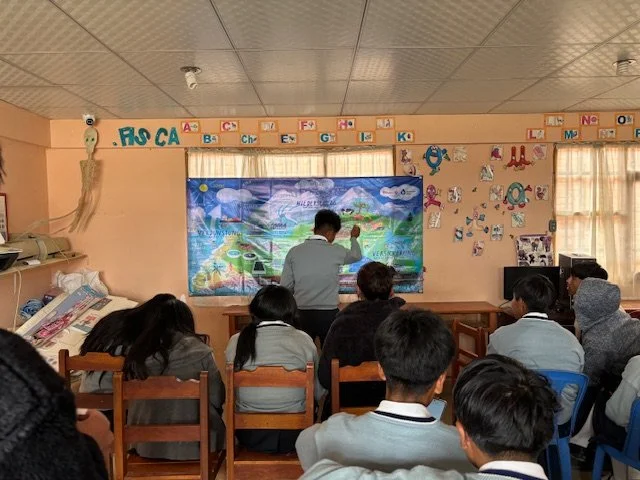
Water Means Learning conducts an on-site technical evaluation, referencing indicators from the WHO/UNICEF Joint Monitoring Program for Water Supply, Sanitation and Hygiene (JMP). In this phase, Water Means Learning delivers on-site workshops on WASH and Integrated Water Management to students in 11th and 12th grades, school staff, and parents. Participants also complete questionnaires to assess the status of WASH infrastructure at their school.
Students participate in an integrated water management workshop. Poster courtesy of the project wasser^plus OWL.
Throughout this phase, we support the school community in forming two committees to lead the water projects: one composed of parents and school staff, and another of students in 11th and 12th grade. These committees help organize the community and ensure local ownership of the project throughout its implementation and into the future.
The student committee plays a key role, as students are the primary users of the infrastructure and can actively learn throughout each stage of the process. Water Means Learning also supports students through online workshops on topics such as systems thinking, leadership, and water-related issues.
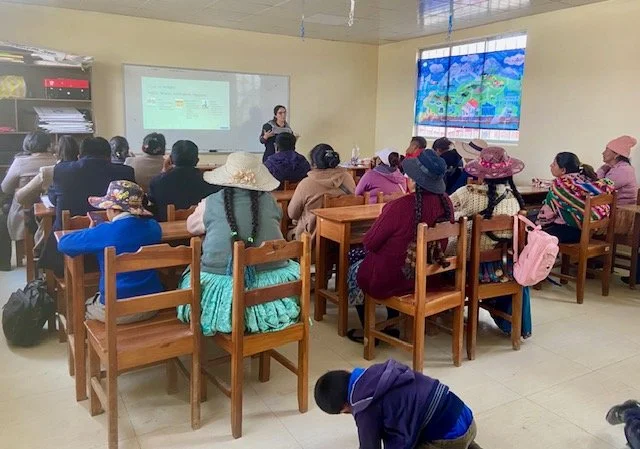
School staff and parents participate in a WASH workshop.
Activities and Learning Approaches in Phase 1:
Workshops (structured learning)
Questionnaires (reflection and awareness)
Committee formation (organizational learning and leadership development)
Technical assessment (shared understanding of infrastructure)
Peer-to-peer learning (students, parents, staff sharing knowledge)
Learning by doing (e.g., participating in assessments and project activities)
Collective reflection on local problems and solutions
Building a shared understanding of water and hygiene systems
Current WASH Infrastructure
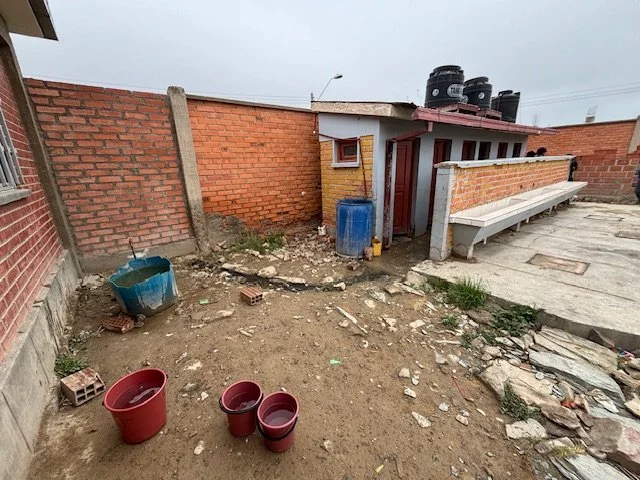
The school has six toilets connected to a basic septic tank system, which has exceeded its capacity. According to the school principal, the facilities were originally designed for approximately 70 students, but there are now over 280 students. The septic tank is emptied every 2–3 months.
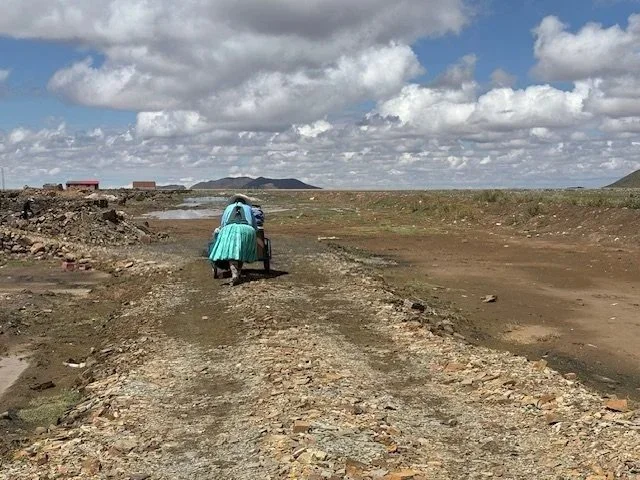
During the rainy season, additional challenges arise. The school is built on a former lakebed, resulting in a high water table that often leads to inundation in the sanitation facilities.
The toilets are frequently out of service due to a lack of water. In WASH questionnaires conducted by Water Means Learning, students report that they often avoid using the bathrooms due to bad smell, poor cleanliness, and a lack of safety. They also note that they do not feel secure when using the facilities. In addition, the toilets are not clearly labeled as separate facilities for boys and girls.
Toilets and Septic Tank
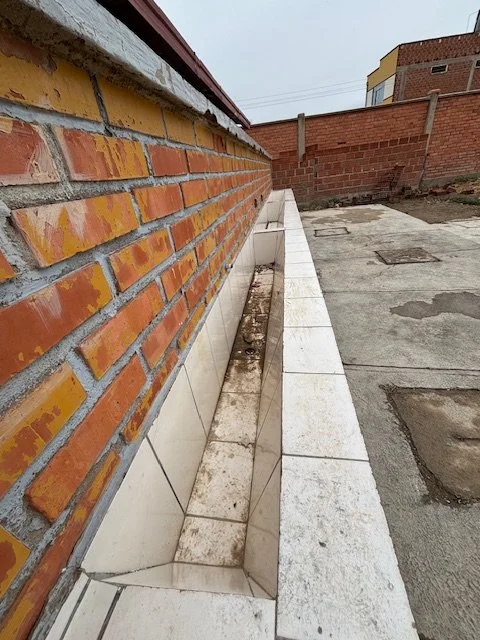
Handwashing station located in front of the toilets, currently not operational.
There is a handwashing station in front of the toilets, but it is not in use because the school only has running water for about 2–3 hours per day. The water is supplied through the municipal piped water system. There are only two water faucets located on the perimeter of the toilet area, both with very low water flow.
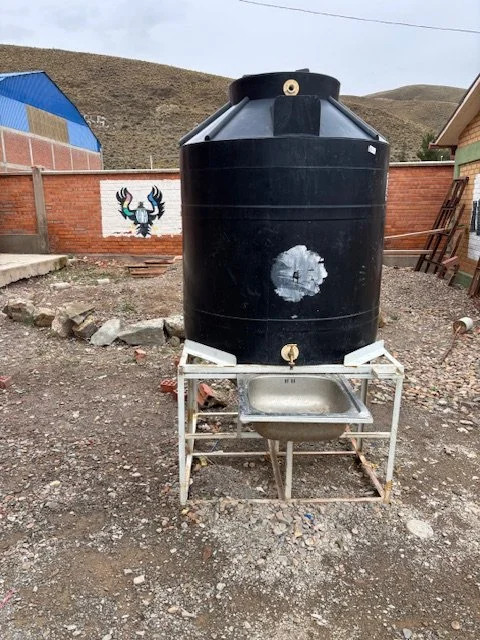
Current handwashing station: a large water storage container used to collect and store water from the tap when it is available.
During the limited water supply period, school staff collect water with buckets and fill three large storage containers adapted for use as handwashing stations. The school does not apply any additional treatment to the water stored in these containers. Students also reported that soap is rarely available at the handwashing stations.